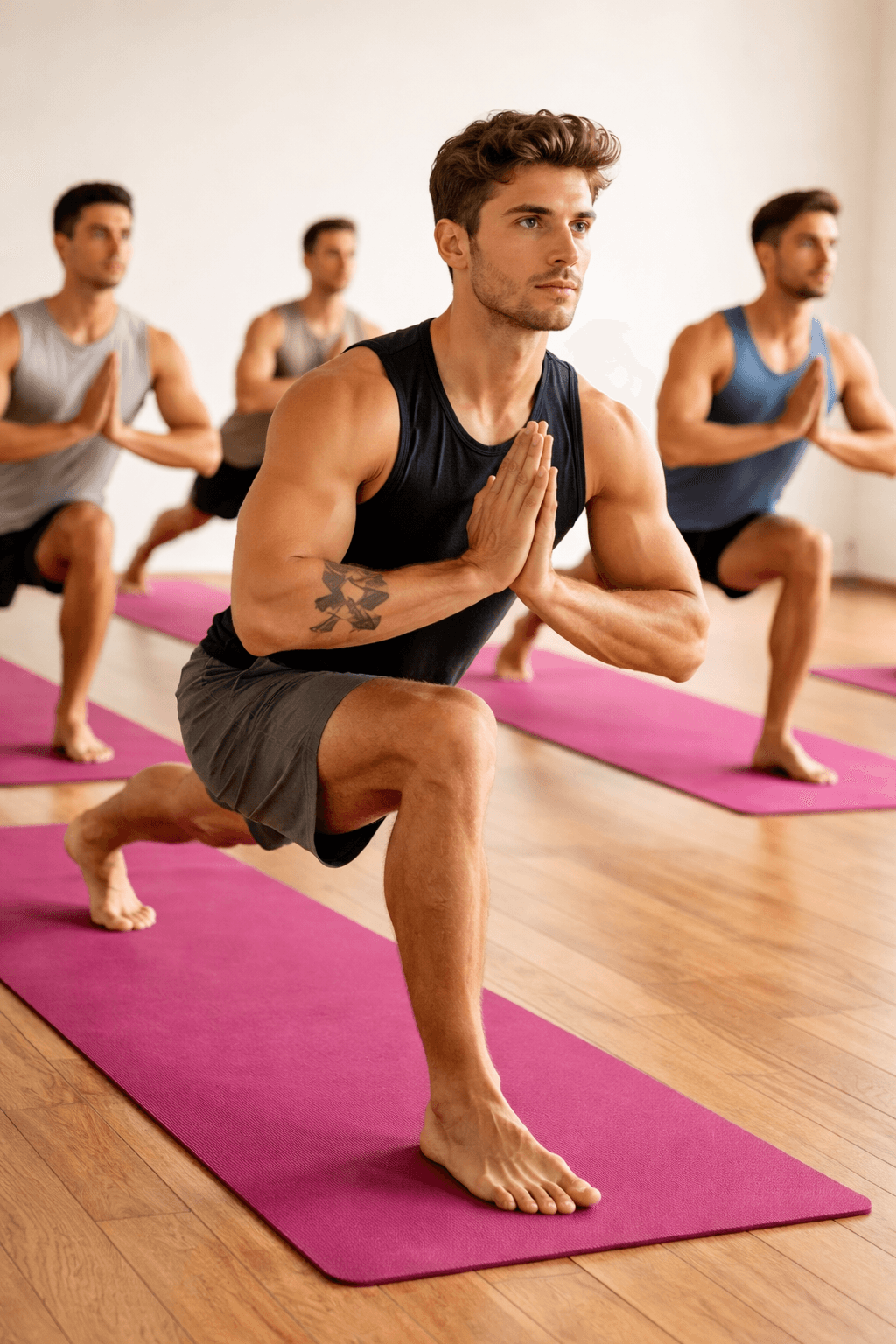
Stretch. Flow. Protect. Why Yoga Makes You a Stronger, Safer Athlete
At Joy Lab Fitness + Social Club, we celebrate movement of all kinds — from weight training to running to being a three sport athlete. One of the most powerful complementary practices you may be overlooking is yoga. Far from being solely “relaxing,” yoga brings serious performance and injury-prevention benefits for athletes and anyone who demands more from their body (and wants it to last).
How Yoga Helps the Athlete’s Body
When you’re training hard (running, lifting, jumping, pivoting) you’re asking your body to move, stop, start, and stabilize in ways that challenge muscles, joints, tendons, and neuromuscular control. Yoga supports this in multiple ways:
Improved flexibility and range of motion — Better joint mobility means you’re less likely to “throw” your knee, roll an ankle, or pull a tight hamstring because your body has more movement “buffer.”
Enhanced balance, core stability and proprioception — Many yoga poses force you to stabilize your body in non-standard positions which translates to better control during sport-specific moves.
Better muscular balance and postural alignment — A regular yoga practice helps address muscular imbalances (common in athletes who train asymmetrically) which can lead to overuse or compensation injuries.
Stronger mind-body connection, better recovery, and reduced stress load — Yoga’s breathing, mindfulness and movement features help the nervous system recover, reduce inflammation, and rebuild from training stress so you’re less vulnerable to injury.
Evidence That Yoga Reduces Injury Risk
Here are some key findings:
A 2022 study of collegiate athletes found that a yoga intervention significantly improved their Functional Movement Screen (FMS) score (from a median of 13.0 to 17.0) — higher FMS scores are associated with lower injury risk. https://pmc.ncbi.nlm.nih.gov/articles/PMC9690310/
A 2020 feasibility study explored the effect of a 10-week yoga program on antecedents of sports‐related injury and found promising reductions in risk factors. https://pubmed.ncbi.nlm.nih.gov/32669766/
A recent review article highlights that regular yoga practice can lead to reduced risk of recurring injuries among athletes by improving stability, mobility, and neuromuscular control. This is because yoga enhances flexibility, balance, and core strength while also building mental resilience to better manage stress and prevent overtraining. https://pmc.ncbi.nlm.nih.gov/articles/PMC10775845/
These studies suggest that adding yoga to your regimen isn’t just “nice to have” — it’s smart, proactive training.
What This Means for You at Joy Lab Fitness + Social Club
So how do you make this relevant for your membership and your athletic goals? Here are some ways we integrate yoga to boost performance and safeguard your body:
Include 1–2 yoga sessions per week: Use these as active recovery days — not just stretching, but yoga flows that challenge balance, mobility and core strength.
Use yoga to target weak links: If you’re a runner, include poses that open the hips, stabilize the glutes and address calf/ankle mobility. If you’re a lifter or court athlete, include shoulder-openers, thoracic spine work, and ankle stability.
Finish workouts with 10–15 minutes of yoga-inspired cool-down: Instead of rushing out, this allows the nervous system to reset, muscles to lengthen, and mind to recover — which lowers risk of next-day injury.
Teach body awareness and alignment cues: One of the hidden benefits of yoga is how it helps you feel what your body is doing (and not doing). At Joy Lab, we emphasize mindful movement, core engagement, and awareness of how you land/brace/transition — all of which protect joints and tendons.
Promote consistency over intensity: Injury often happens when we train hard but don’t allow recovery. Yoga offers a moderate-intensity, high-benefit option that supports longevity and resilience.
Frequently Asked Questions
Does yoga make me slower or weaker?
Not at all. When done smartly, yoga builds strength (especially stabilizer muscles), improves efficiency of movement, and enhances power by improving range of motion and neuromuscular coordination.
Do I need to become a “yogi” to benefit?
No. You don’t need to be advanced, do handstands, or invest hours. Even 20–30 minutes of targeted yoga twice a week can make a meaningful difference. The key is quality, consistency, and purposeful integration with your sport/training.
When in my training schedule should I do yoga?
On lighter days or active recovery days: use longer flows (30-45 min) focusing on mobility/strength.
After heavy sessions: use 10–15 min yoga as cool-down.
On rest or travel days: use 20-30 min gentle yoga to maintain movement quality and neural recovery.
Final Word
At Joy Lab Fitness + Social Club we believe in training smarter, not just harder. By weaving yoga into your athletic regimen, you’re investing in better performance today and injury prevention tomorrow. It’s one of the most useful tools in the athlete’s toolkit — because longevity in sport means you get to keep moving, competing, enjoying — without being sidelined.
Stay strong. Stay balanced. And keep your body in motion for the long haul.
Stretch. Flow. Protect. Why Yoga Makes You a Stronger, Safer Athlete
At Joy Lab Fitness + Social Club, we celebrate movement of all kinds — from weight training to running to being a three sport athlete. One of the most powerful complementary practices you may be overlooking is yoga. Far from being solely “relaxing,” yoga brings serious performance and injury-prevention benefits for athletes and anyone who demands more from their body (and wants it to last).
How Yoga Helps the Athlete’s Body
When you’re training hard (running, lifting, jumping, pivoting) you’re asking your body to move, stop, start, and stabilize in ways that challenge muscles, joints, tendons, and neuromuscular control. Yoga supports this in multiple ways:
Improved flexibility and range of motion — Better joint mobility means you’re less likely to “throw” your knee, roll an ankle, or pull a tight hamstring because your body has more movement “buffer.”
Enhanced balance, core stability and proprioception — Many yoga poses force you to stabilize your body in non-standard positions which translates to better control during sport-specific moves.
Better muscular balance and postural alignment — A regular yoga practice helps address muscular imbalances (common in athletes who train asymmetrically) which can lead to overuse or compensation injuries.
Stronger mind-body connection, better recovery, and reduced stress load — Yoga’s breathing, mindfulness and movement features help the nervous system recover, reduce inflammation, and rebuild from training stress so you’re less vulnerable to injury.
Evidence That Yoga Reduces Injury Risk
Here are some key findings:
A 2022 study of collegiate athletes found that a yoga intervention significantly improved their Functional Movement Screen (FMS) score (from a median of 13.0 to 17.0) — higher FMS scores are associated with lower injury risk. https://pmc.ncbi.nlm.nih.gov/articles/PMC9690310/
A 2020 feasibility study explored the effect of a 10-week yoga program on antecedents of sports‐related injury and found promising reductions in risk factors. https://pubmed.ncbi.nlm.nih.gov/32669766/
A recent review article highlights that regular yoga practice can lead to reduced risk of recurring injuries among athletes by improving stability, mobility, and neuromuscular control. This is because yoga enhances flexibility, balance, and core strength while also building mental resilience to better manage stress and prevent overtraining. https://pmc.ncbi.nlm.nih.gov/articles/PMC10775845/
These studies suggest that adding yoga to your regimen isn’t just “nice to have” — it’s smart, proactive training.
What This Means for You at Joy Lab Fitness + Social Club
So how do you make this relevant for your membership and your athletic goals? Here are some ways we integrate yoga to boost performance and safeguard your body:
Include 1–2 yoga sessions per week: Use these as active recovery days — not just stretching, but yoga flows that challenge balance, mobility and core strength.
Use yoga to target weak links: If you’re a runner, include poses that open the hips, stabilize the glutes and address calf/ankle mobility. If you’re a lifter or court athlete, include shoulder-openers, thoracic spine work, and ankle stability.
Finish workouts with 10–15 minutes of yoga-inspired cool-down: Instead of rushing out, this allows the nervous system to reset, muscles to lengthen, and mind to recover — which lowers risk of next-day injury.
Teach body awareness and alignment cues: One of the hidden benefits of yoga is how it helps you feel what your body is doing (and not doing). At Joy Lab, we emphasize mindful movement, core engagement, and awareness of how you land/brace/transition — all of which protect joints and tendons.
Promote consistency over intensity: Injury often happens when we train hard but don’t allow recovery. Yoga offers a moderate-intensity, high-benefit option that supports longevity and resilience.
Frequently Asked Questions
Does yoga make me slower or weaker?
Not at all. When done smartly, yoga builds strength (especially stabilizer muscles), improves efficiency of movement, and enhances power by improving range of motion and neuromuscular coordination.
Do I need to become a “yogi” to benefit?
No. You don’t need to be advanced, do handstands, or invest hours. Even 20–30 minutes of targeted yoga twice a week can make a meaningful difference. The key is quality, consistency, and purposeful integration with your sport/training.
When in my training schedule should I do yoga?
On lighter days or active recovery days: use longer flows (30-45 min) focusing on mobility/strength.
After heavy sessions: use 10–15 min yoga as cool-down.
On rest or travel days: use 20-30 min gentle yoga to maintain movement quality and neural recovery.
Final Word
At Joy Lab Fitness + Social Club we believe in training smarter, not just harder. By weaving yoga into your athletic regimen, you’re investing in better performance today and injury prevention tomorrow. It’s one of the most useful tools in the athlete’s toolkit — because longevity in sport means you get to keep moving, competing, enjoying — without being sidelined.
Stay strong. Stay balanced. And keep your body in motion for the long haul.
Stretch. Flow. Protect. Why Yoga Makes You a Stronger, Safer Athlete
At Joy Lab Fitness + Social Club, we celebrate movement of all kinds — from weight training to running to being a three sport athlete. One of the most powerful complementary practices you may be overlooking is yoga. Far from being solely “relaxing,” yoga brings serious performance and injury-prevention benefits for athletes and anyone who demands more from their body (and wants it to last).
How Yoga Helps the Athlete’s Body
When you’re training hard (running, lifting, jumping, pivoting) you’re asking your body to move, stop, start, and stabilize in ways that challenge muscles, joints, tendons, and neuromuscular control. Yoga supports this in multiple ways:
Improved flexibility and range of motion — Better joint mobility means you’re less likely to “throw” your knee, roll an ankle, or pull a tight hamstring because your body has more movement “buffer.”
Enhanced balance, core stability and proprioception — Many yoga poses force you to stabilize your body in non-standard positions which translates to better control during sport-specific moves.
Better muscular balance and postural alignment — A regular yoga practice helps address muscular imbalances (common in athletes who train asymmetrically) which can lead to overuse or compensation injuries.
Stronger mind-body connection, better recovery, and reduced stress load — Yoga’s breathing, mindfulness and movement features help the nervous system recover, reduce inflammation, and rebuild from training stress so you’re less vulnerable to injury.
Evidence That Yoga Reduces Injury Risk
Here are some key findings:
A 2022 study of collegiate athletes found that a yoga intervention significantly improved their Functional Movement Screen (FMS) score (from a median of 13.0 to 17.0) — higher FMS scores are associated with lower injury risk. https://pmc.ncbi.nlm.nih.gov/articles/PMC9690310/
A 2020 feasibility study explored the effect of a 10-week yoga program on antecedents of sports‐related injury and found promising reductions in risk factors. https://pubmed.ncbi.nlm.nih.gov/32669766/
A recent review article highlights that regular yoga practice can lead to reduced risk of recurring injuries among athletes by improving stability, mobility, and neuromuscular control. This is because yoga enhances flexibility, balance, and core strength while also building mental resilience to better manage stress and prevent overtraining. https://pmc.ncbi.nlm.nih.gov/articles/PMC10775845/
These studies suggest that adding yoga to your regimen isn’t just “nice to have” — it’s smart, proactive training.
What This Means for You at Joy Lab Fitness + Social Club
So how do you make this relevant for your membership and your athletic goals? Here are some ways we integrate yoga to boost performance and safeguard your body:
Include 1–2 yoga sessions per week: Use these as active recovery days — not just stretching, but yoga flows that challenge balance, mobility and core strength.
Use yoga to target weak links: If you’re a runner, include poses that open the hips, stabilize the glutes and address calf/ankle mobility. If you’re a lifter or court athlete, include shoulder-openers, thoracic spine work, and ankle stability.
Finish workouts with 10–15 minutes of yoga-inspired cool-down: Instead of rushing out, this allows the nervous system to reset, muscles to lengthen, and mind to recover — which lowers risk of next-day injury.
Teach body awareness and alignment cues: One of the hidden benefits of yoga is how it helps you feel what your body is doing (and not doing). At Joy Lab, we emphasize mindful movement, core engagement, and awareness of how you land/brace/transition — all of which protect joints and tendons.
Promote consistency over intensity: Injury often happens when we train hard but don’t allow recovery. Yoga offers a moderate-intensity, high-benefit option that supports longevity and resilience.
Frequently Asked Questions
Does yoga make me slower or weaker?
Not at all. When done smartly, yoga builds strength (especially stabilizer muscles), improves efficiency of movement, and enhances power by improving range of motion and neuromuscular coordination.
Do I need to become a “yogi” to benefit?
No. You don’t need to be advanced, do handstands, or invest hours. Even 20–30 minutes of targeted yoga twice a week can make a meaningful difference. The key is quality, consistency, and purposeful integration with your sport/training.
When in my training schedule should I do yoga?
On lighter days or active recovery days: use longer flows (30-45 min) focusing on mobility/strength.
After heavy sessions: use 10–15 min yoga as cool-down.
On rest or travel days: use 20-30 min gentle yoga to maintain movement quality and neural recovery.
Final Word
At Joy Lab Fitness + Social Club we believe in training smarter, not just harder. By weaving yoga into your athletic regimen, you’re investing in better performance today and injury prevention tomorrow. It’s one of the most useful tools in the athlete’s toolkit — because longevity in sport means you get to keep moving, competing, enjoying — without being sidelined.
Stay strong. Stay balanced. And keep your body in motion for the long haul.